In the age of fast fashion, companies like TEMU have risen to prominence, offering trendy clothing at affordable prices. However, beneath the surface of their glossy advertisements lies a disturbing truth: the environmental impact of fast fashion is catastrophic. From pollution to waste, the fashion industry, driven by companies like SHEIN and TEMU, is leaving a trail of destruction in its wake.

The Environmental Toll:
Let’s delve into some sobering statistics:
1. Carbon Emissions: SHEIN and TEMU ship out over one million packages per day. Shipping packages, especially globally, involves transportation such as trucks, airplanes, ships, and possibly trains. Each of these modes emits carbon dioxide (CO2) and other greenhouse gases into the atmosphere, contributing to climate change. To put this into perspective, lets compare CO2 emissions with a more environmentally conscious brand like Levi’s:
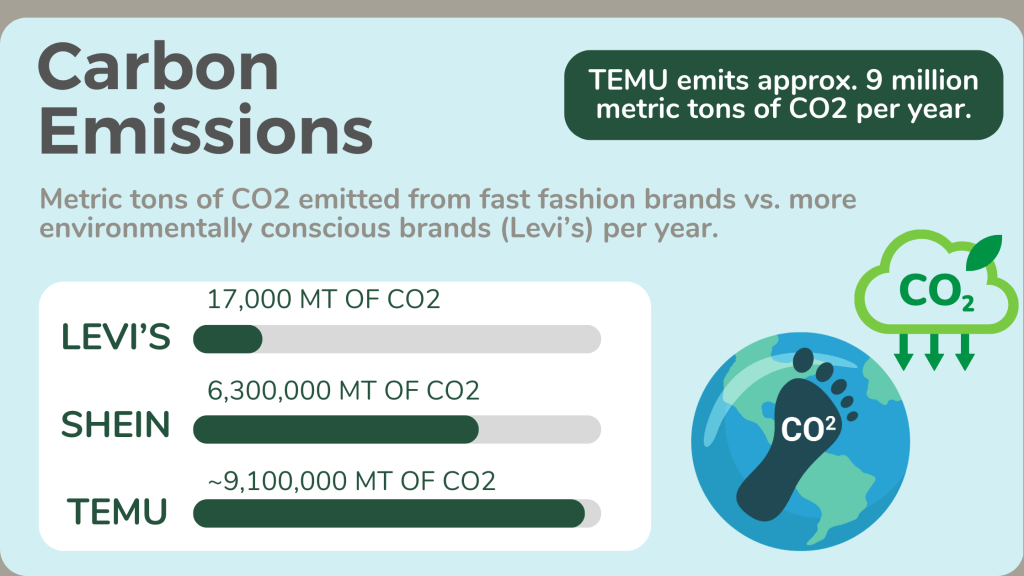
(Source: Sheingroup, Levi Strauss & Co., Statista)
2. Harmful Materials: Many consumers of SHEIN and TEMU report foul-smelling products. Upon investigation, researchers found concerning levels of hazardous chemicals in the products; that of which break EU regulations. Some reports found lead in childrens’ jackets that contained 20 times the amount of lead that Health Canada says is safe for children.
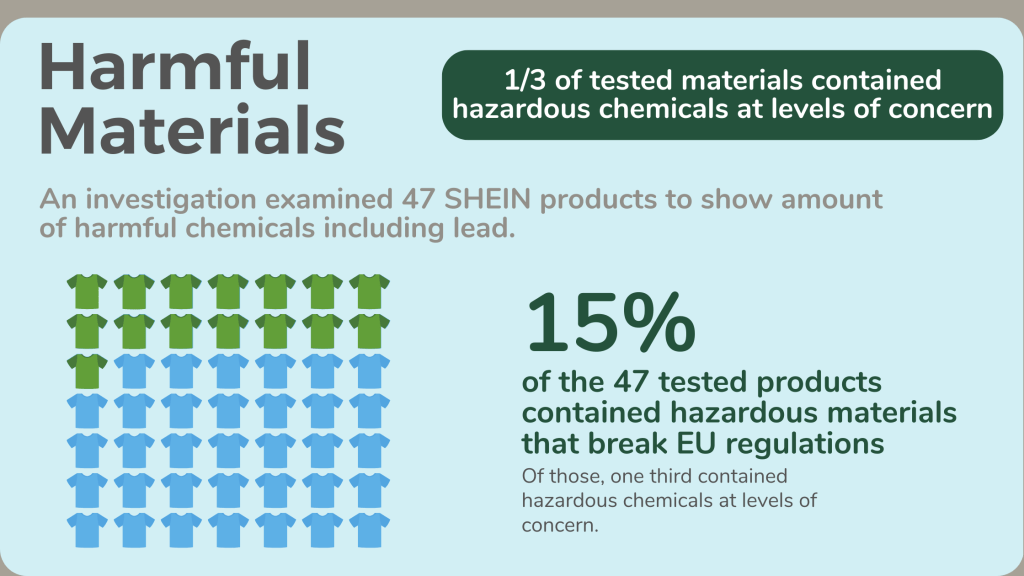
(Source: CBC, Greenpeace)
3. Biodegradability & Sustainability: SHEIN and TEMU use extremely cheap materials in order to produce their products at such an affordable rate. Clearly, as discussed above, this comes with a cost. In addition to lead and other hazardous chemicals in their clothes, their products are made with polyester bend fabrics and other materials that are not biodegradable. This means that not only are they producing products at an alarming rate, but also once produced, these items will sit in landfills for hundreds of years before decomposing.
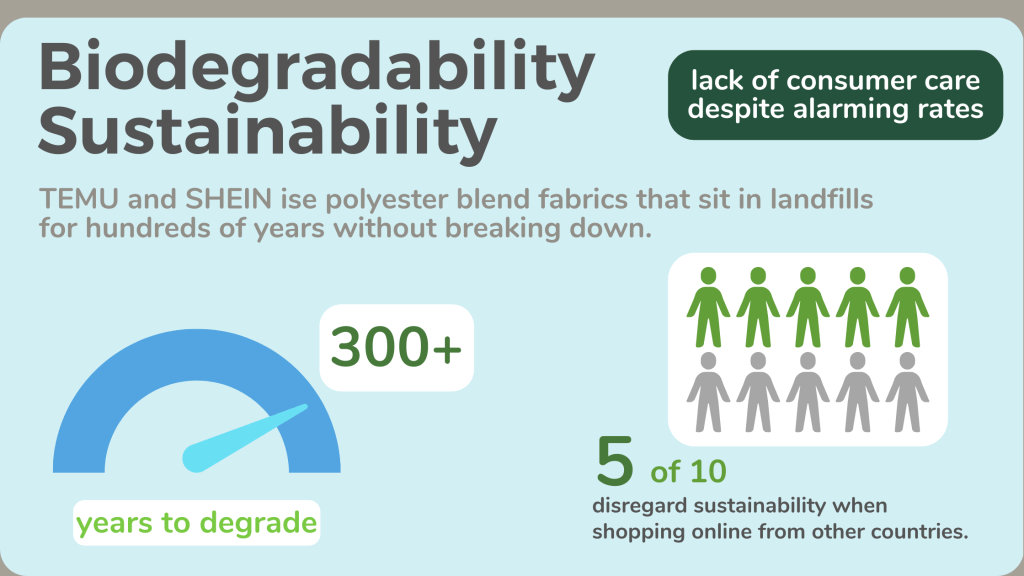
At a Glance:
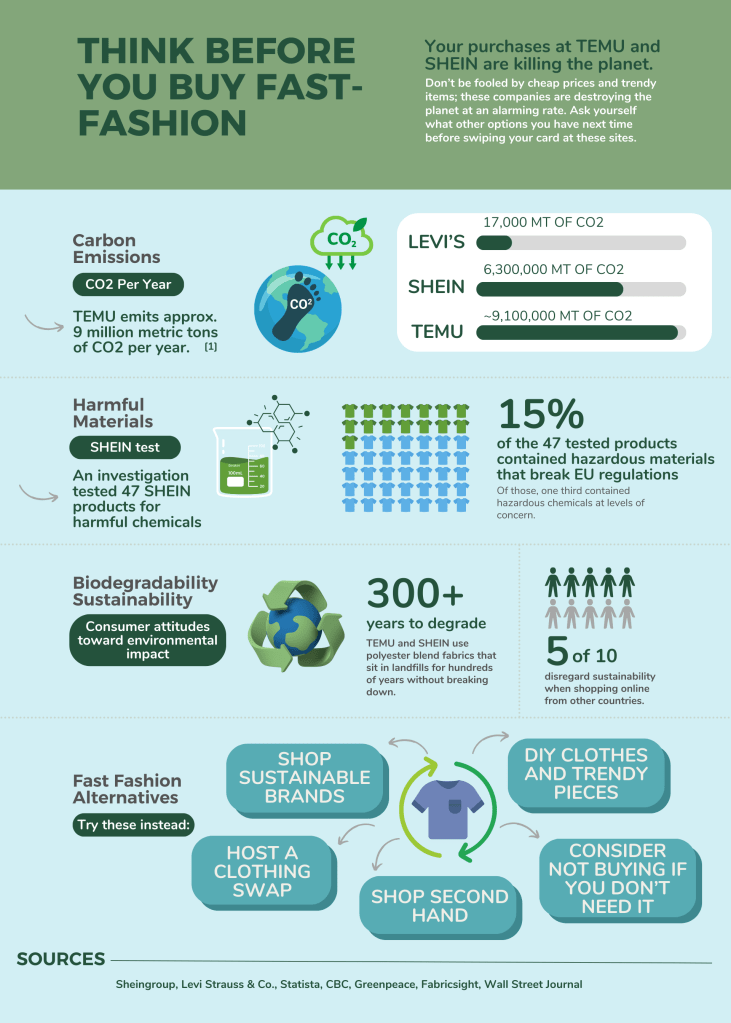
Seeking Solutions:
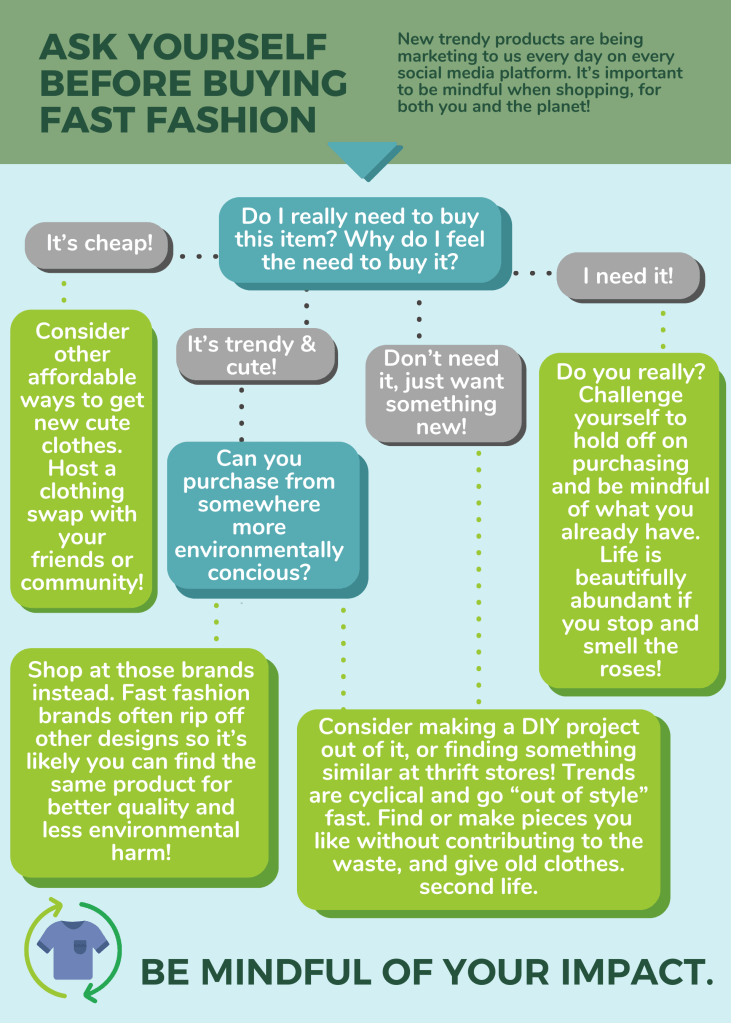
As consumers, we hold the power to drive change. Here are some alternatives to shopping at places like TEMU:
- Support Sustainable Brands: Look for companies that prioritize ethical production, use eco-friendly materials, and promote transparency in their supply chains.
- Invest in Quality: Choose timeless pieces made to last, rather than falling for the allure of cheap, disposable fashion.
- Reduce: Embrace a minimalist mindset by buying fewer, higher-quality items, and learn to be grateful for everything you do have rather than what you could have or want.
- Reuse: Give clothing a second life by shopping second-hand or tackling a DIY project. Not many clothes are very biodegradable, so making use of perfectly good fabric is an excellent way to make something good and new out of “old clothes.”
- Recycle: Host or participate in a clothing swap with your friends or community. It’s a great way to swap out clothes that don’t excite you for other clothes that to you will seem brand new! It’s a win-win for everyone involved and is a slightly more organized alternative to thrift shopping if that over
By making mindful choices, we can challenge the fast fashion model perpetuated by companies like TEMU and pave the way for a more sustainable future.
Let’s fashion a world where style doesn’t come at the cost of our planet.
 Maya Harney
Leave a comment